Sunday, November 16, 2014

A perfect wife, a virtuous woman


Our Lady, Seat of Wisdom, Louvain, Belgium


A perfect wife – who can find her?
She is far beyond the price of pearls.
Her husband’s heart has confidence in her,
from her he will derive no little profit.
Advantage and not hurt she brings him
all the days of her life.
She is always busy with wool and with flax,
she does her work with eager hands.
She sets her hands to the distaff,
her fingers grasp the spindle.
She holds out her hand to the poor,
she opens her arms to the needy.
Charm is deceitful, and beauty empty;
the woman who is wise is the one to praise.
Give her a share in what her hands have worked for,
and let her works tell her praises at the city gates.

Proverbs 31:10-13.19-20.30-31

From the end of the book of Proverbs, these verses form part of an acrostic poem on the noble ideal of womanhood. One of the essential tools of the Jewish and Christian scholars has been to view the scriptures as analogy. All theological language is, of course, analogous. A declaration from the 4th Lateran Council stated: No similarity can be found so great but that the dissimilarity is even greater. Thus although we humans can love so much, God’s love is incomprehensibly greater and has none of limitations of human love.

This is why we speak of Wisdom as a feminine entity. In Hebrew it is a feminine noun. We Catholics most often endow Mary, the Blessed Virgin, with the title Seat of Wisdom – in Latin, sedes sapientiae – as a devotional title, which recognises Mary’s role as the mother of Jesus, and which in iconography depicts her with the Infant Child seated on her knee.

But further, while these words from Proverbs may appear to exalt the perfect wife, or perfect woman – and which we may then appropriately attribute to Mary, the writer of Proverbs is equally exalting of Israel’s relationship with God, about the kind of nation, the kind of people that God calls his own. As church, we are, like Israel, called in to relationship with God.

There are many scriptural images of the relationship between God and his people. There is the intimacy of the dysfunctional marriage of Hosea and his wife Gomer, the beauty of the Song of Songs. However, the writer of Proverbs writes of the perfect relationship – one undoubtedly modelled on the culture of his time, and you and I are invited both personally and communally into this relationship of perfection in which our fidelity is expressed in word, work, action and praise.


Peter


End of Year celebrations

If you would like to invite Peter to your end of year assembly would you please contact Carole. Peter will work on a first in, first serve basis. Our regional EOs also love to receive invitations!


Well done, Leeann!


On Friday 7 November, our EO: Curriculum (NW), Leeann Medwin, was honoured and recognised by  ACEL by awarding her a Certificate of Excellence in Educational Leadership! A number of our colleagues, principals and TCEO staff were present, including our Acting Director Sean Gill and Head of Mission and Education Services Sandra Harvey. The contribution of former Director Trish Hindmarsh to education was also recognised at the same ceremony. Congratulations to you, Leeann!


Road runners (Burnie 10)

Guess who ran in the Burnie 10? And who flew down here just to run?


REFLECTIONS ON CHRISTIAN LEADERSHIP
by Kevin Treston

Group Facilitation

Many tasks of the leader relate to managing groups such as staff, pastoral council, management teams, parish and school assemblies, parents and friends associations.  The quality of interpersonal relations is a major concern for any leader. Jesus devoted much of his ministry to the formation of his group of disciples.  The gospels recount his struggles to inculcate his vision and the obduracy of the disciples (e.g. Mk. 9:33-37; Mk. 10:35-40).

Group leaders use helpful strategies to assist people to interact creatively and achieve their goals.  Those involved in leading groups will find the following suggestions helpful in the facilitation of group relationships:

·      Encourage a shared belief among group members about the positive value of consensus decision making.
·      Ensure that the physical arrangement of the room is conducive to positive group interactions.  Avoid a ‘top/bottom’ seating.
·      Plan an appropriate process for that particular group.  The levels of personal maturity and education, the stage of group development, the degree of competence in achieving the task are some of the factors, which would shape the kind of process used.
·      Attend to the two major purposes of a group viz.  achieving its purpose and facilitating health interactions.
·      Helps to achieve group tasks are:
o   Clarify the purpose of the group
o   Initiate an appropriate process          
o   Communicate relevant information
o   Keep to the task
o   Develop possible options
o   Focus on a solution
o   Plan actions
·      Evaluate outcomes and the proces Good relationships in a group are helped by these approaches:
o   Welcome people into the group and introduce members to one another
·       Set a climate of respectful listening
o   Creatively manage conflict
o   Establish a group culture of synergizing
o   Encourage members to participate if they so choose
o   Acknowledge differences and use them for better option
o   Help people to become bonded in the Spirit
o   Establish eye contact
o   Show care for one another

There are many variations in the character and purposes of groups such as groups for prayer, social justice, pastoral planning, per support, pastoral councils, school and hospital administration teams, staff meetings.  Good leadership in the groups helps people to experience the value of working together for communal reward.


* * * * * * * * * * * * * * *


Peter's whereabouts
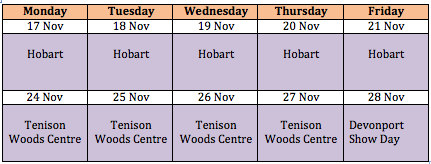

 Diary


From Marist Regional College


 From Our Lady of Mercy


From Sacred Heart - Launceston


From Sacred Heart - Ulverstone


From St Anthony's


 From Larmenier


From St Brigid's


From St Finn Barr's


 From St Joseph's - Queenstown


 From St Brendan Shaw College


From St Joseph's - Rosebery


From St Patrick's - Latrobe


From St Patrick's - Launceston


 From St Peter Chanel's


 From St Thomas More's


From Star of the Sea


From Sacred Heart - Ulverstone


From Stella Maris


Sunday, November 9, 2014

True worship


Just before the Jewish Passover Jesus went up to Jerusalem, and in the Temple he found people selling cattle and sheep and pigeons, and the money changers sitting at their counters there. Making a whip out of some cord, he drove them all out of the Temple, cattle and sheep as well, scattered the money changers’ coins, knocked their tables over and said to the pigeon-sellers, ‘Take all this out of here and stop turning my Father’s house into a market’. Then his disciples remembered the words of scripture: Zeal for your house will devour me. The Jews intervened and said, ‘What sign can you show us to justify what you have done?’ Jesus answered, ‘Destroy this sanctuary, and in three days I will raise it up’. The Jews replied, ‘It has taken forty-six years to build this sanctuary: are you going to raise it up in three days?’ But he was speaking of the sanctuary that was his body, and when Jesus rose from the dead, his disciples remembered that he had said this, and they believed the scripture and the words he had said.

John 2:13 - 22


Jesus' next public act after the wedding at Cana was the less than aptly named cleansing of the Temple. His disciples whom he had called one or two days before have accompanied him to the Temple. The everyday business surrounding the cultic Temple worship of the Judaeans was taking place. Money changers were needed in order exchange Roman coins into Temple coins [Roman coins would defile the sanctity of the Temple]; the sellers of pigeons, sheep and cattle conveniently provide animals for sacrifice. Undoubtedly they are there for profit, though some their prices are extortionate. But they were there to provide a service.

To the disciples' surprise and undoubtedly their horror, their rabbi, their new master, expressed his anger by literally lashing out on the money changers and sellers. They barely knew this man. Surely they were afraid?

The Temple plaza that surrounded the Temple was 480 m x 300 m. It was so huge that Jesus would have been raging for hour after hour if he was ‘cleansing’ the Temple. So what then is the point of this story?

John’s story was constructed some 20 or 30 years after the destruction of the Temple. It was John’s vehicle to describe the end of Temple worship, to purposely place Jesus at the centre of God’s action. Change is coming, radical change; the way things have been is no longer acceptable. The Temple is redundant. Jesus himself embodies all that the Temple was for the Jews. He is the centre and focus of worship in the Christian community.

So this story asks us: Who or what is at the centre of our worship? What distracts us from true worship. Jewish life was bound by rules that prevented true worship, so have we managed to worship without being burdened and overwhelmed by rules? Our worship is, we believe, most perfect when we listen and respond to God’s Word, when we place our intercessions before our God, we break bread and share the cup of wine as we remember the words of institution, and when we go out to proclaim Good News to the world.

Our church is a mammoth – if divine institution. And that it itself presents an obstruction to true worship. We possess more rules and regulations than you can throw a stick at, our complex liturgical laws alone are comprehensible to but a few. We worry about the purity and nuances of the vernacular; we are either for or against the Extraordinary form of the Mass; the internet is alive with traditionalist blogs defaming the riches of modern liturgical practice. Is this our evidence of true worship?

This weekend we recalled the dedication of the Archbasilica of St John Lateran, the cathedral church of the diocese of Rome. It is a place of enormous beauty. The sculptured twelve apostles created by seven brilliant artists are awe-inspiring.  There are six papal tombs within it, and up to fifteen other popes’ remains are held in a polyandrum.  Visiting St John Lateran is both a religious and emotional experience.

Why is this feast day remembered with this Gospel? It is to remind us, that no matter how clever we are at building monuments to the God who loves us, such buildings do not capture God, and nor should they capture us. They point to, but can never, ever take the place of, true worship.


Peter


REFLECTIONS ON CHRISTIAN LEADERSHIP
by Kevin Treston

Mutual Gain or Win-Win


When conflict happens, good leaders avoid exercising power over others for the sake of political or personal gain.  They search for a resolution of conflict or at least its management.  Differences of opinion are seen, not as threats to harmony, but as assets.  Diverse viewpoints tell the community that the picture is not complete.  If the differences can be incorporated into the ultimate decision, then the solution has been enriched by additional wisdoms.  A win/lose style of leadership results in losers being alienated from owning the decision.  They either surrender gracefully, opt out of implementation or await the inevitable day of paypack.


Mutual gain style of leadership assumes an abundance mentality rather than a scarcity mindset.  Mutual gain leaders see the big picture.  They don’t indulge in posturing games but work towards the best possible outcome for the school or parish.  They are attentive listeners to various points of view and synergise divergent opinions by drawing out from each person particular insights.  The process of synergising is the art of extracting elements from an array of often conflicting opinions and regrouping the ideas into a holistic solution.

----------------------------------------------------------------------------------------------


Peter's whereabouts


Diary 


From Marist Regional College


From Our Lady of Lourdes


From Our Lady of Mercy


From St Anthony's 


 From St Brendan Shaw College


From St Brigid's


From Sacred Heart, Launceston


From Sacred Heart, Ulverstone


From St Joseph's, Rosebery


From Star of the Sea College


From St Patrick's College, Prospect


From St Peter Chanel


From St Patrick's, Latrobe


From St Thomas More's